Resortwear Case Study
How a Spanish Boutique Built a 14-Look Marrakech Resort Lookbook in One AI Session
Marrakech editorial without the flight, the permits, or the $10K-a-day team. The mechanics of a cohesive 14-look resort collection from face refs, background refs, and one MODA AI session.
May 22, 2026 · 10 min read
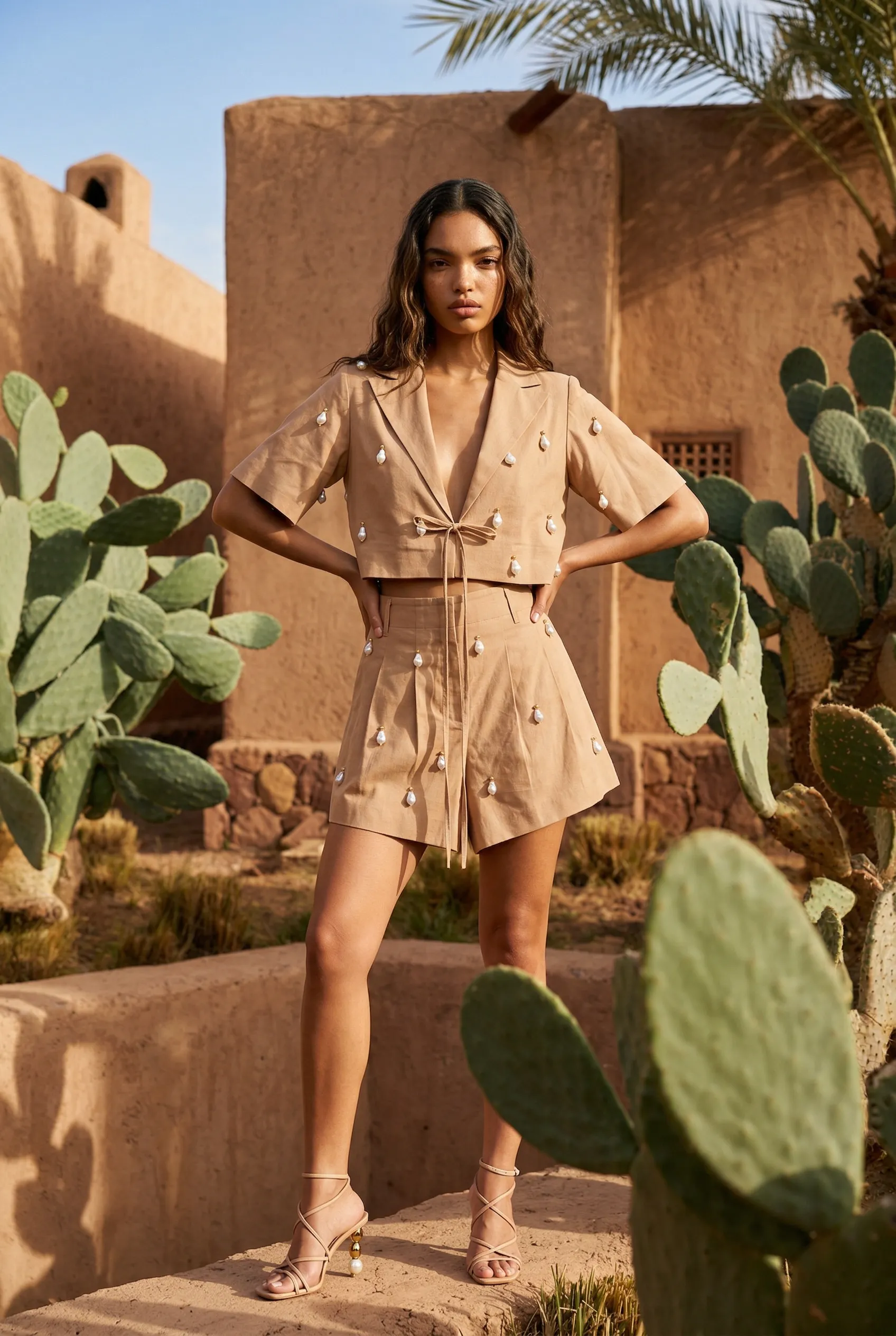
The opening frame. Tan linen, pearl detailing, cactus garden, adobe wall, golden Marrakech light. Generated in MODA AI — no flight, no permit, no shoot day.
$45.7B
projected global resortwear market by 2034 — up from $26B in 2024, 5.8% CAGR
Custom Market Insights
$10K+
typical professional editorial day rate — before flights, location permits, or models
Siobhan Beasley, 2024
25–40%
conversion lift from cohesive professional vs. inconsistent product photography
Welpix conversion study
The Spanish Boutique’s Bind
Spanish boutique resort brands are in the middle of a moment. Business of Fashion has tracked Paloma Wool targeting $25M in sales, La Veste already pulling 40-45% of revenue from the US market without a permanent store there, and Flabelus expanding to 25 locations by end of 2025. Charo Ruiz, Maria de la Orden, Gimaguas — the indie-Spain shelf has never looked more credible internationally.
The product is the easy part. Spanish design talent is deep, the manufacturing base is real, the aesthetic is differentiated. The hard part is the imagery. The customer of a Spanish resort brand is buying the lifestyle as much as the garment. Charo Ruiz isn’t selling a dress; it’s selling Ibiza in August. Paloma Wool isn’t selling a knit; it’s selling Mediterranean breeziness with a downtown edge. Without the imagery to carry that lifestyle, the product looks generic.
And the imagery costs money. A real editorial day with photographer, stylist, hair, makeup, lighting, and assistants runs $10,000+ per day. A 14-look resort drop realistically needs three to four shoot days, plus travel to Morocco or the Balearics, location permits, model fees, and post-production. Total budget for a small boutique: $40K–$80K. That math doesn’t work for a brand still in the $1M–$5M revenue band — which is exactly where most of the Spanish indie set sits.
What follows is the workflow that closes the gap. A 14-garment resort collection generated in a single MODA AI session, with one face reference locking the model and a handful of background references holding the Marrakech world together. The output looks like a campaign because the inputs are designed to act like one.
What “Cohesive” Actually Means
The word gets thrown around. Here’s the technical checklist that separates a real campaign from a stitched-together lookbook:
The face reference and background reference are the two mechanical levers that deliver all six. The face refs and background refs guide goes into the controls in detail. The walkthroughs below show them at work on a real 14-look resort drop.
Walkthrough 1 — The Stripe Family
Five Colorways, One Collection
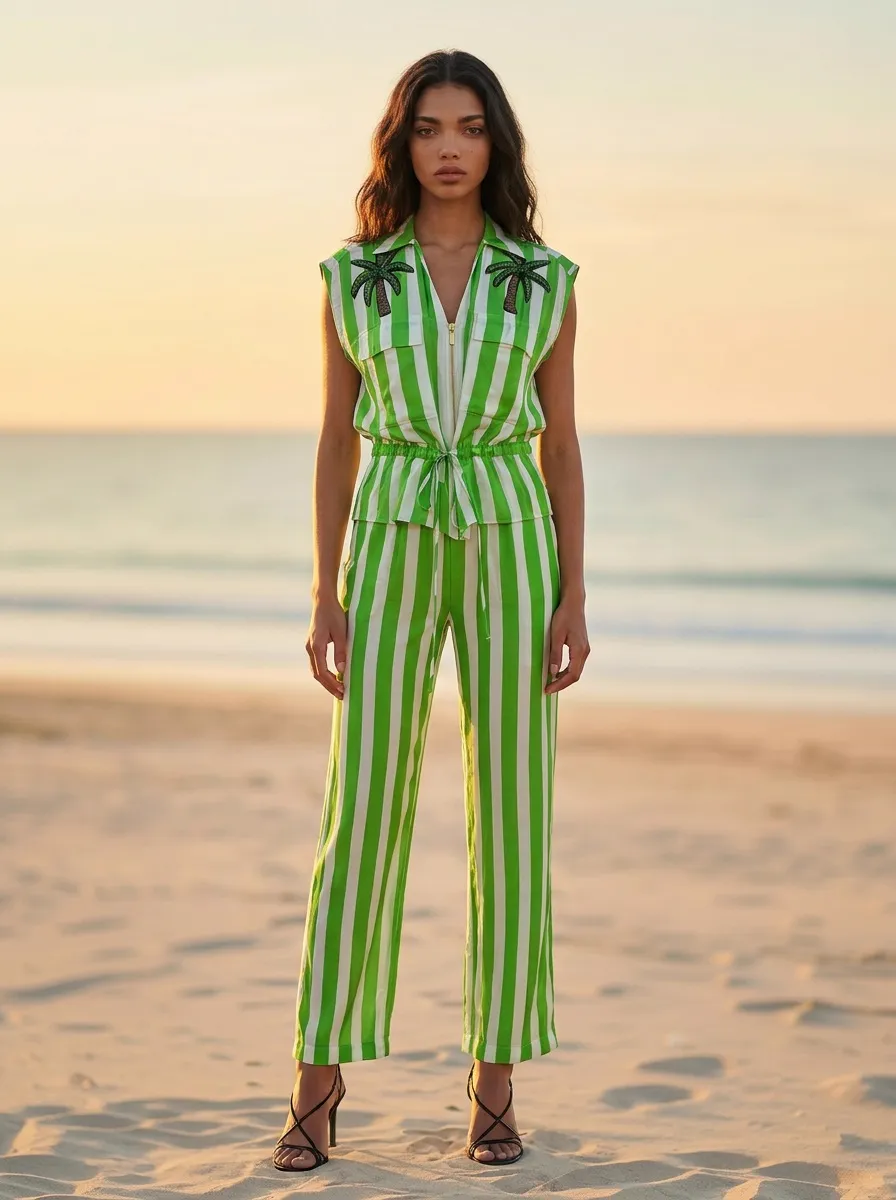
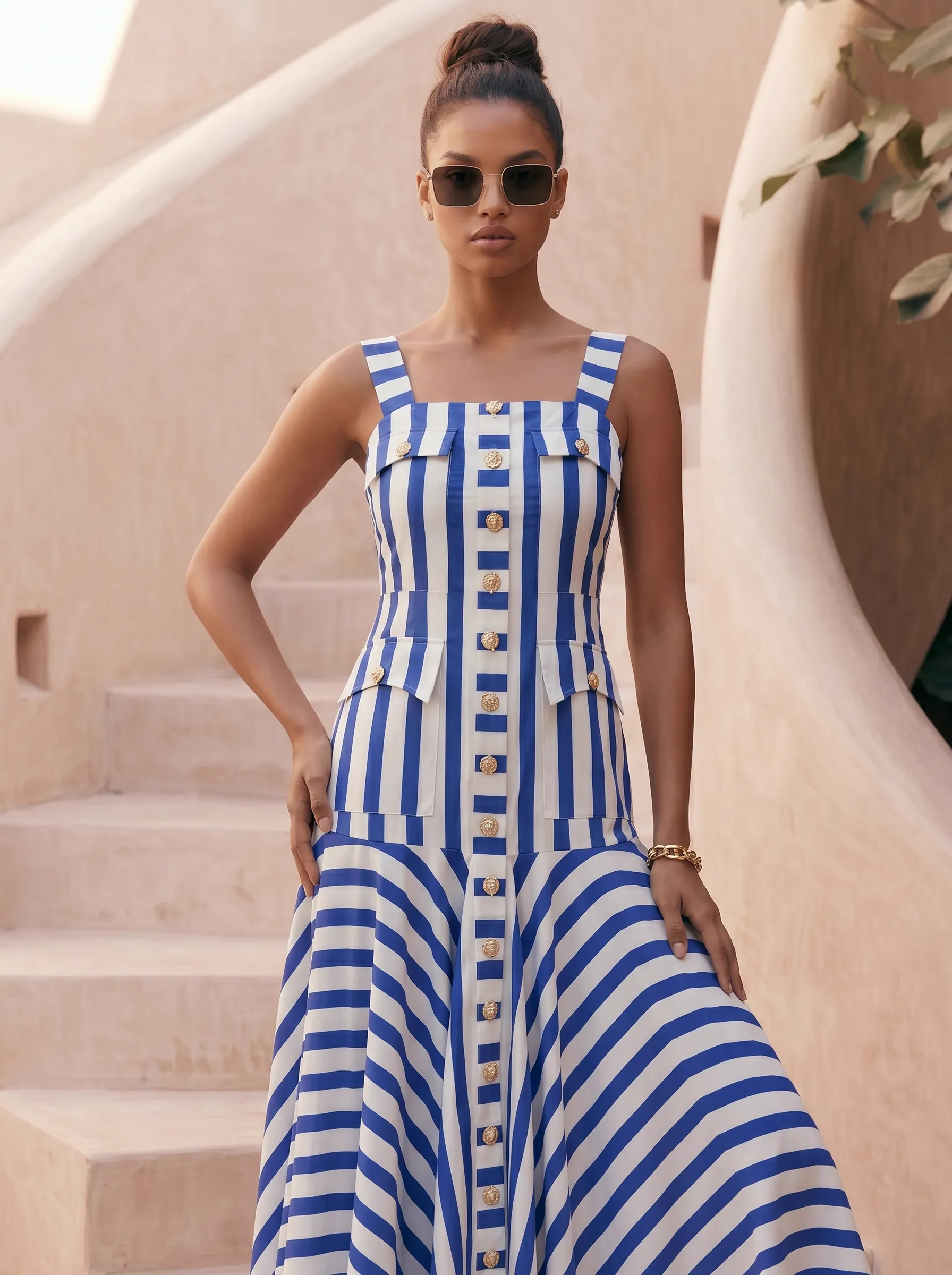
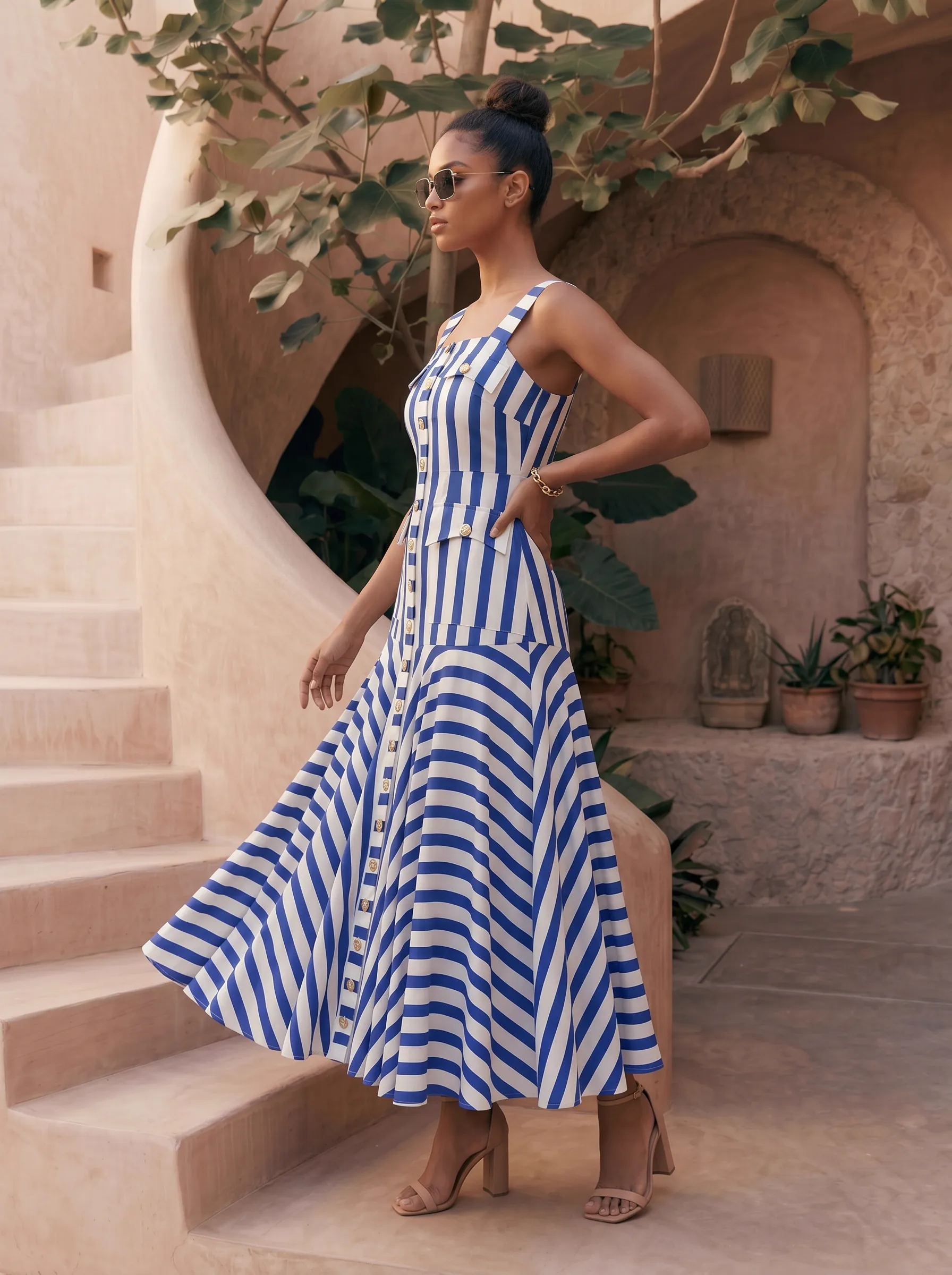
Vertical stripes are the spine of this resort drop — navy, blue, brown, yellow, palm-green. On paper, five color families risks looking chaotic. In practice, the colors are united by shared stripe geometry, the same square-neck and shoulder-strap construction, and the same warm Marrakech lighting across every frame. The collection logic is visible.
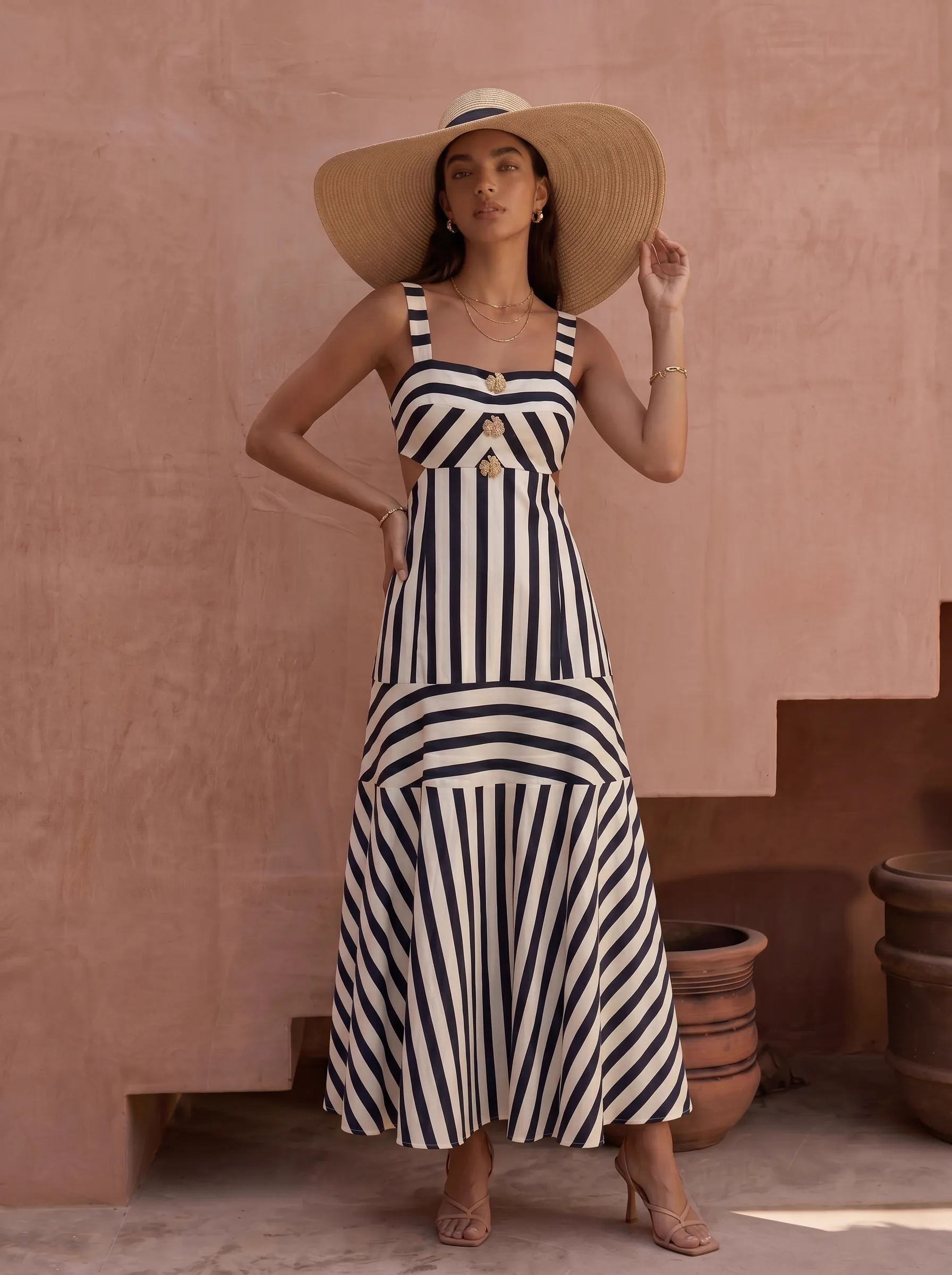
Navy — the formal anchor
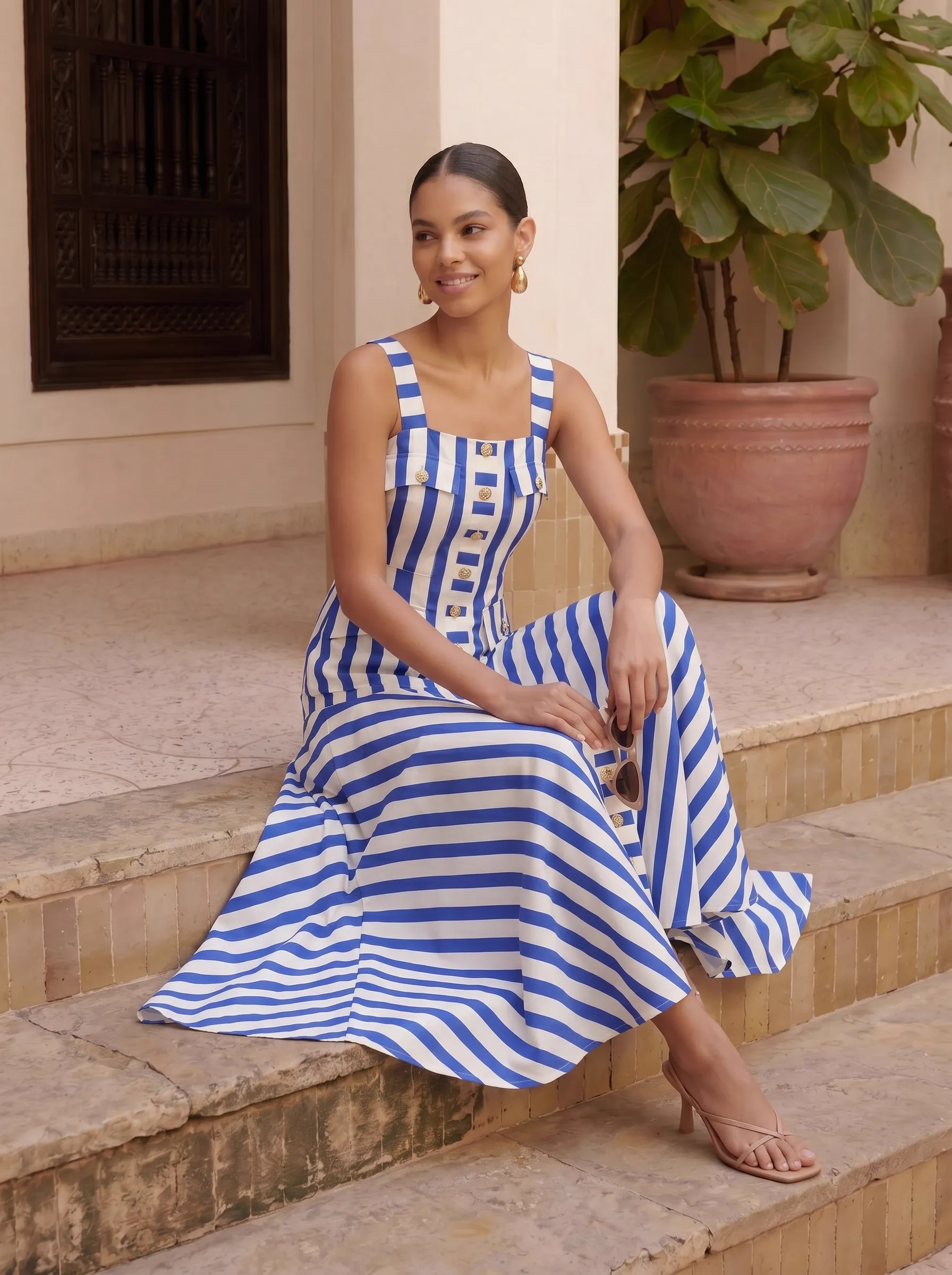
Cobalt blue — the everyday hero
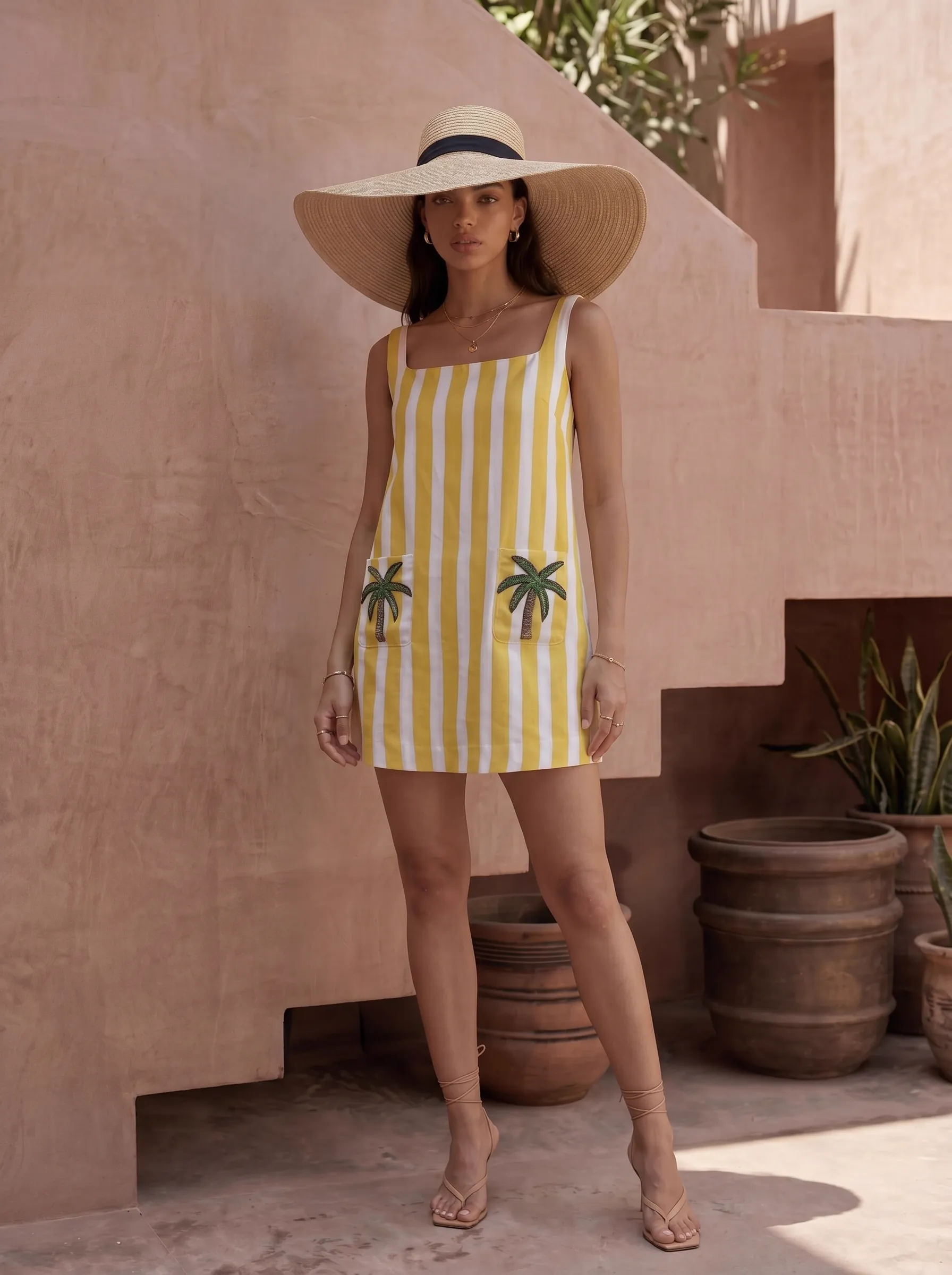
Yellow + palm — the playful
Palm-green — the seaside
Four colorways. Same shoulder construction, same stripe DNA, same model, same warm light. The collection reads as one drop.
Blue sundress — styled with sunglasses
Same stripes, the spiral staircase
Walkthrough 2 — Pearl + Palm Motifs
The Embellishment Story
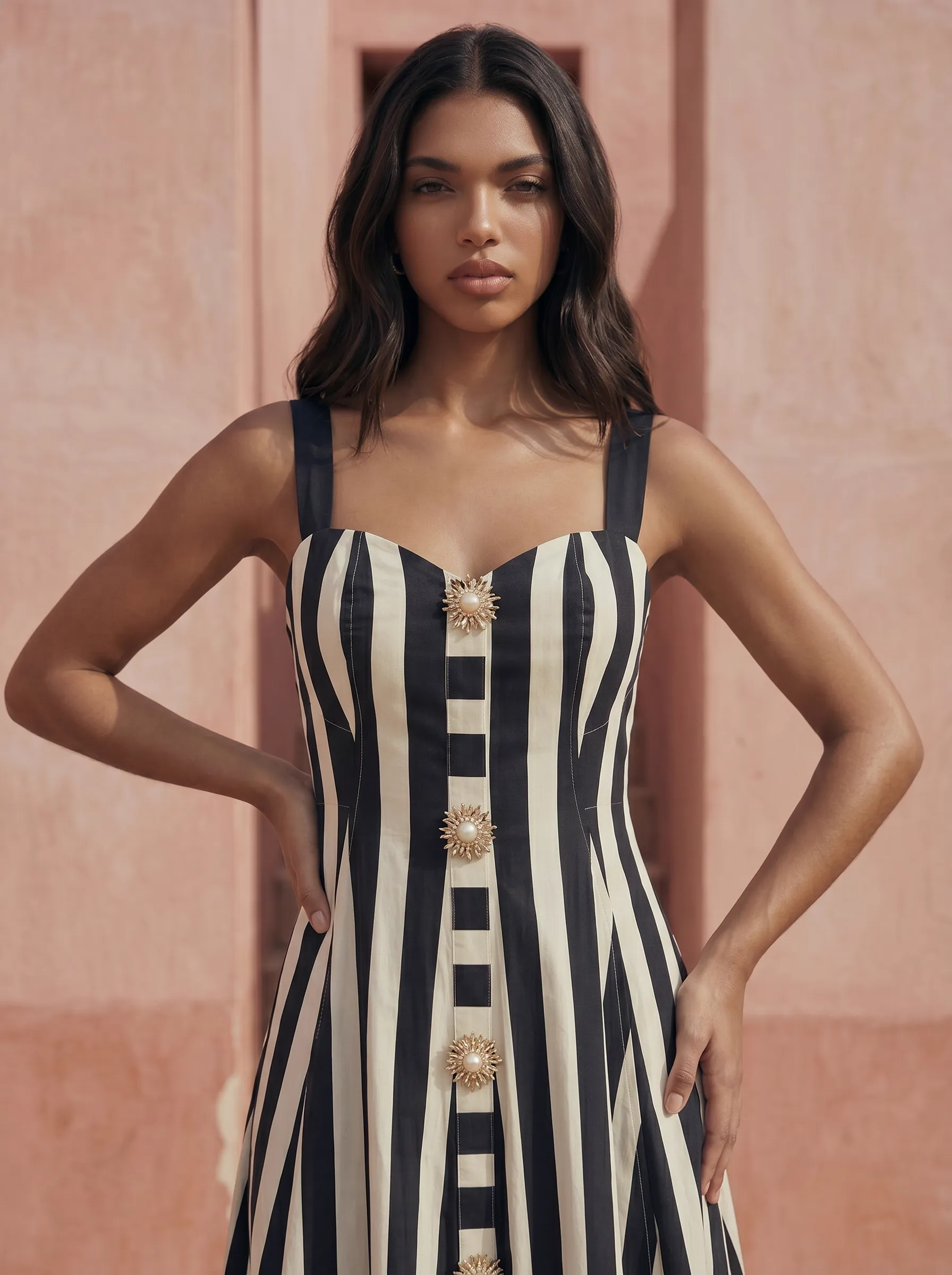
A resort collection needs at least one elevated thread that lifts the whole drop above the basics. In this brief, that thread is the pearl-and-sunflower button motif and the palm tree appliqué. Both repeat across multiple silhouettes — the tan suit, the black blazer-and-barrel-jeans set, the brown stripe maxi, the striped shirt-and-skirt sets. The repetition is what signals collection rather than catalog.
Pearl button detail close-up
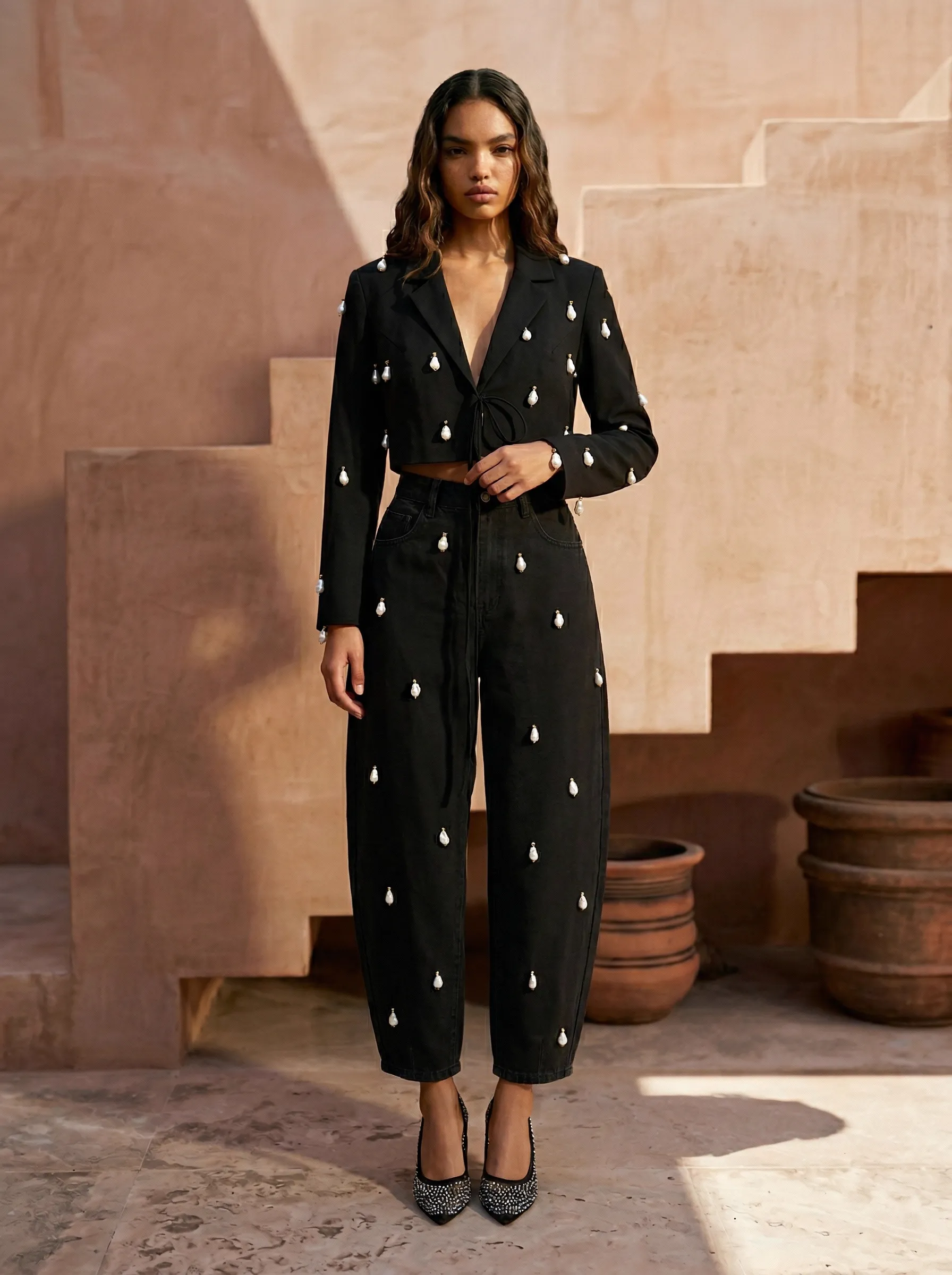
Pearl-embroidered black set
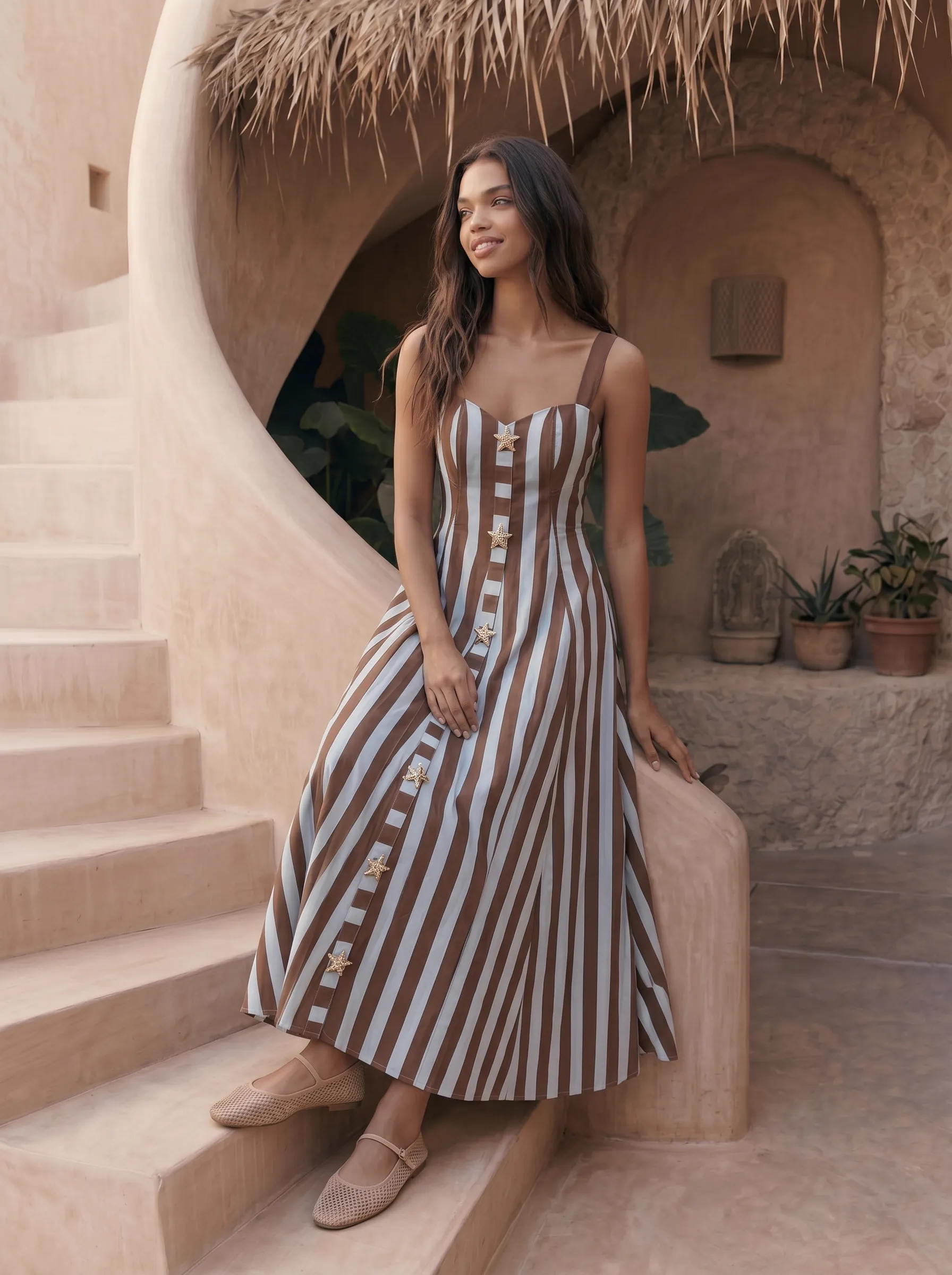
Brown stripe + pearl — the bridge piece
Three garments, one embellishment language. The collection logic shows even when colors and silhouettes change.
Walkthrough 3 — The Neutral Anchor
Beige Linen, the Quiet Center
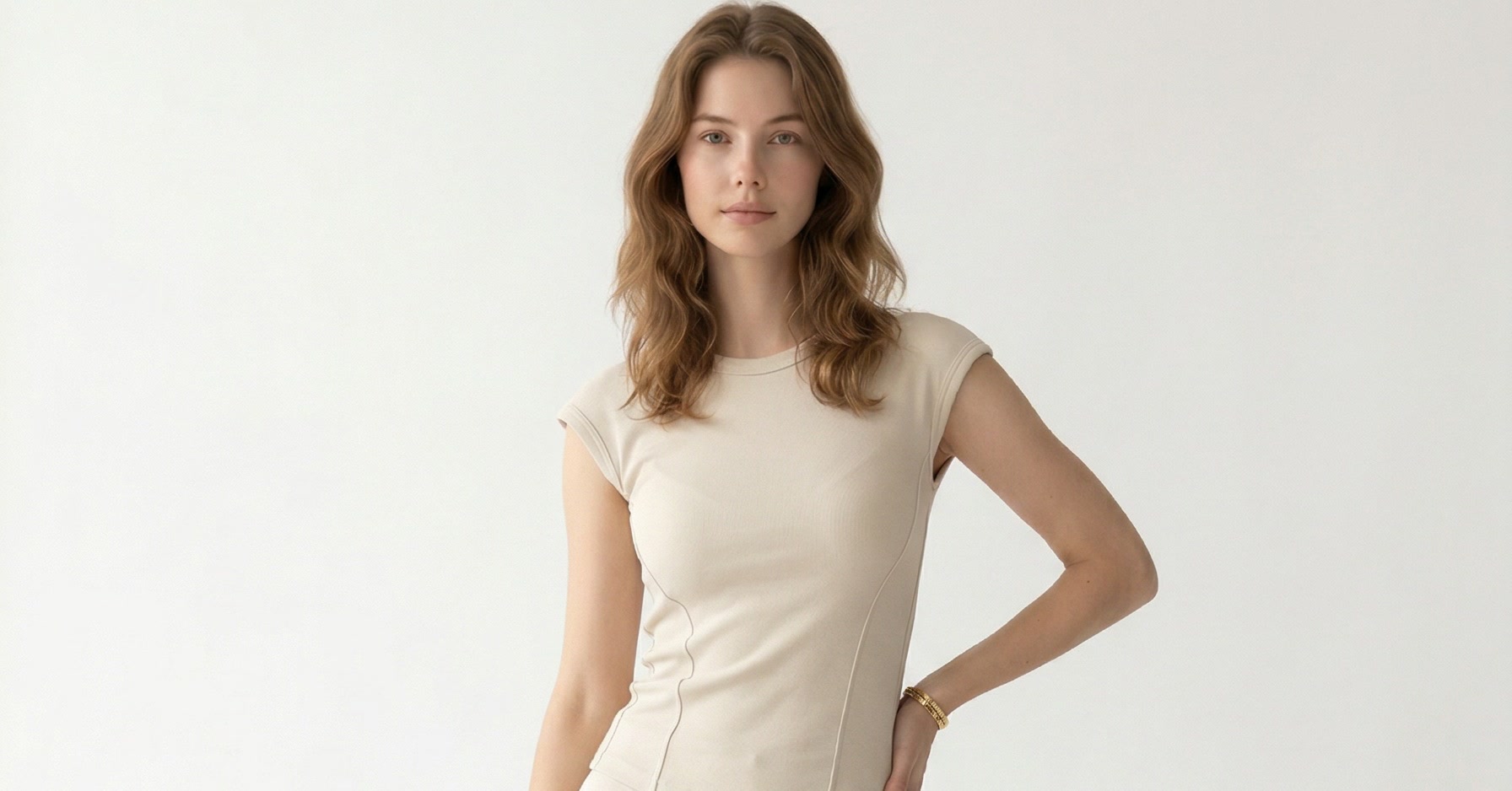
Every resort collection needs a neutral spine. The customer who buys three stripes also buys one beige two-piece — the everyday piece they actually wear when they’re back in Madrid or Mallorca or the office. In this drop, the cream linen sleeveless top with button-trim wide-leg pants does that job. Same model, same Marrakech adobe palette, same gold-button detailing the rest of the collection uses.
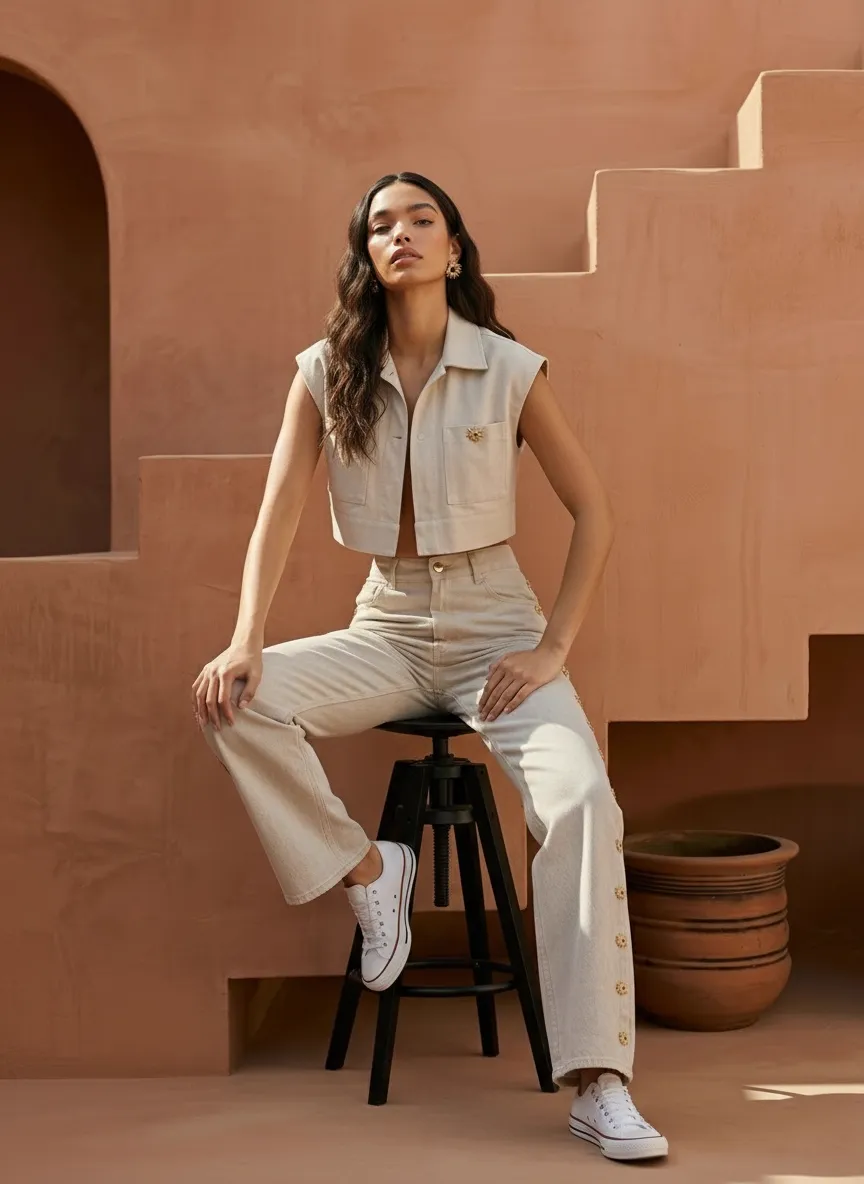
Seated — editorial framing
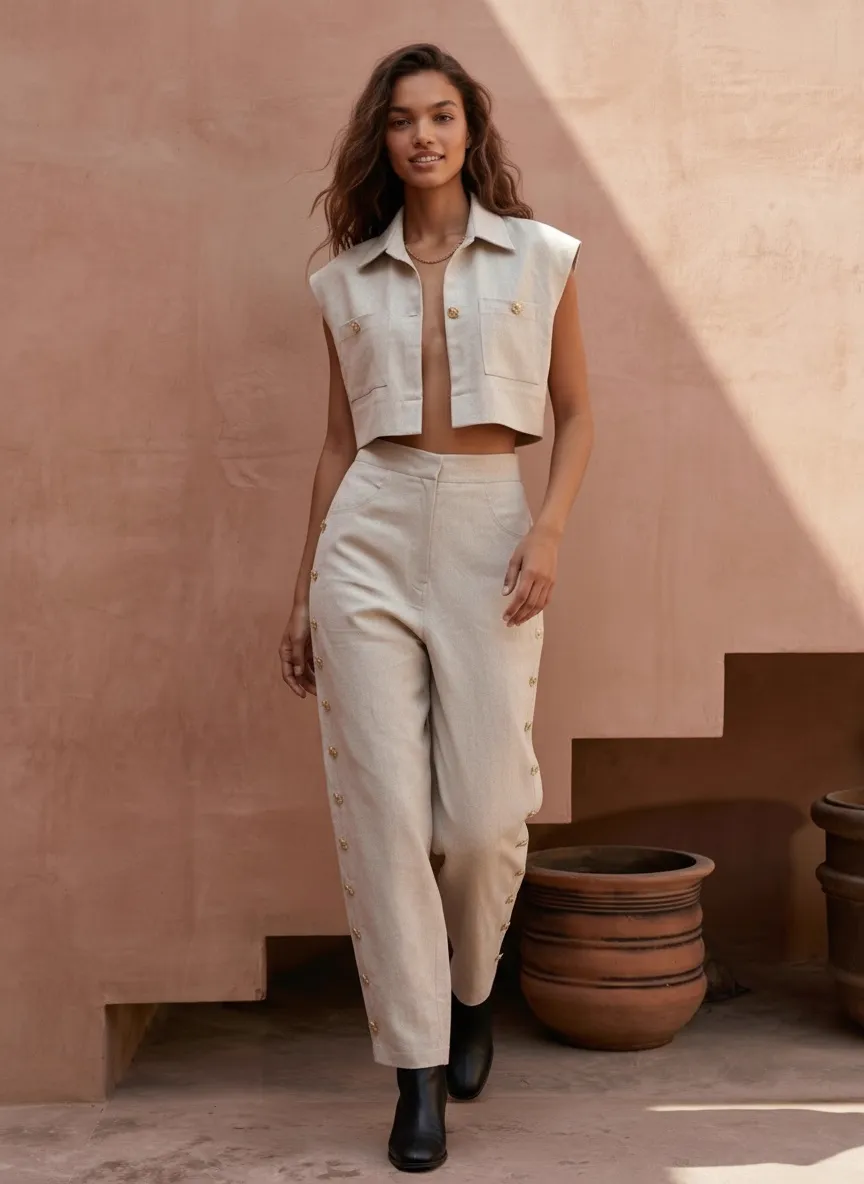
Standing — PDP-ready front
Why neutrals are the credibility test
Neutral fabrics are where most generic AI tools fail first. Beige drifts to pink. Cream drifts to yellow. Linen loses its weave texture. MODA AI holds the input fabric color — this beige reads as the same beige across both frames, with the linen weave still visible at scale.
Walkthrough 4 — The Location World
Marrakech to Sea, One Palette
A cohesive resort campaign doesn’t mean every shot in the same spot. It means every shot in the same world. This drop ranges across four locations — cactus garden, spiral mud staircase, palapa-roofed terrace, and seaside rocks — but the warm earth palette, golden light, and architectural language carry through all of them. The customer browsing the collection on the PDP doesn’t ask “where is she now?” They ask “what’s next?”
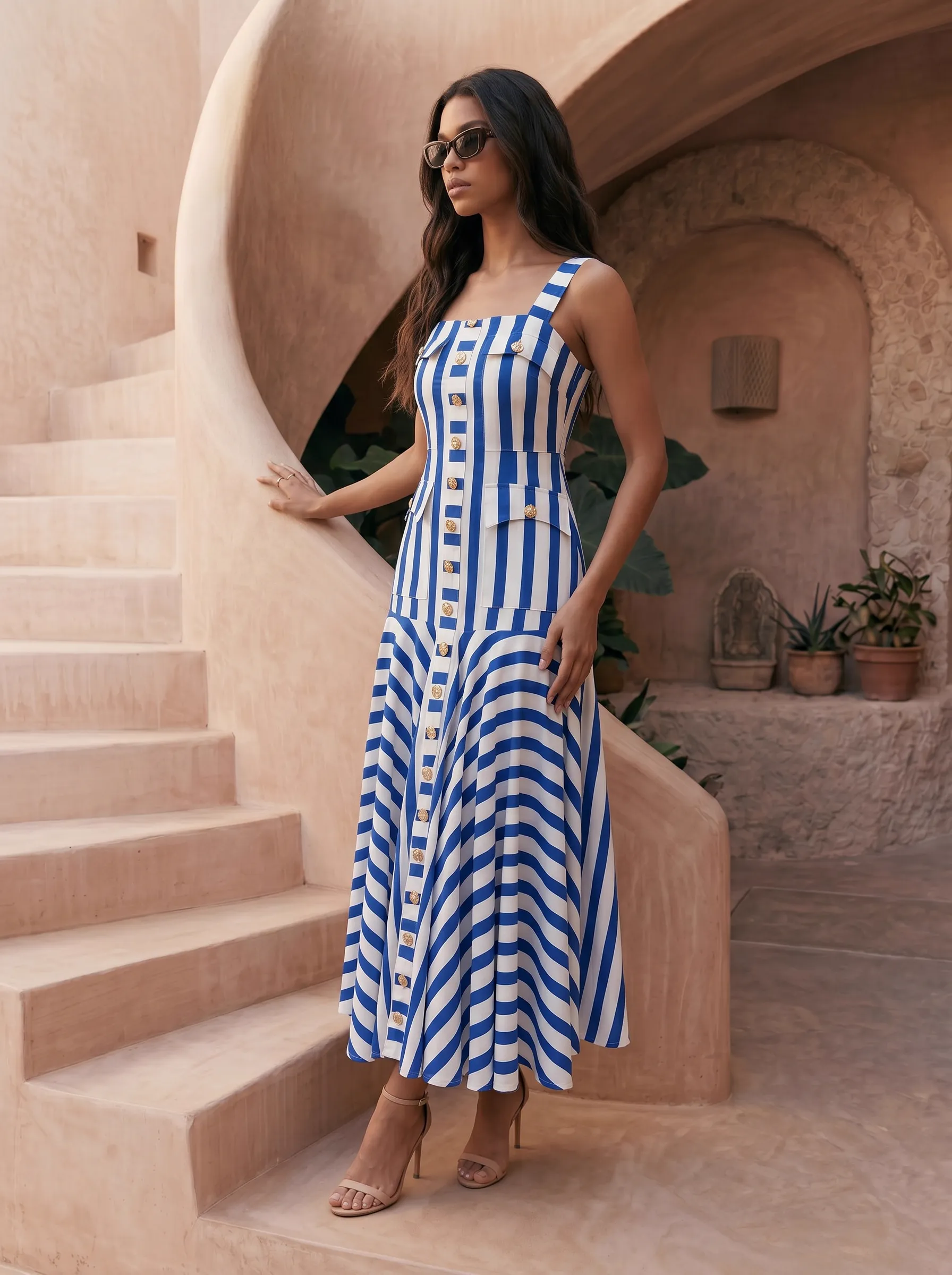
Spiral mud staircase, the architectural signature
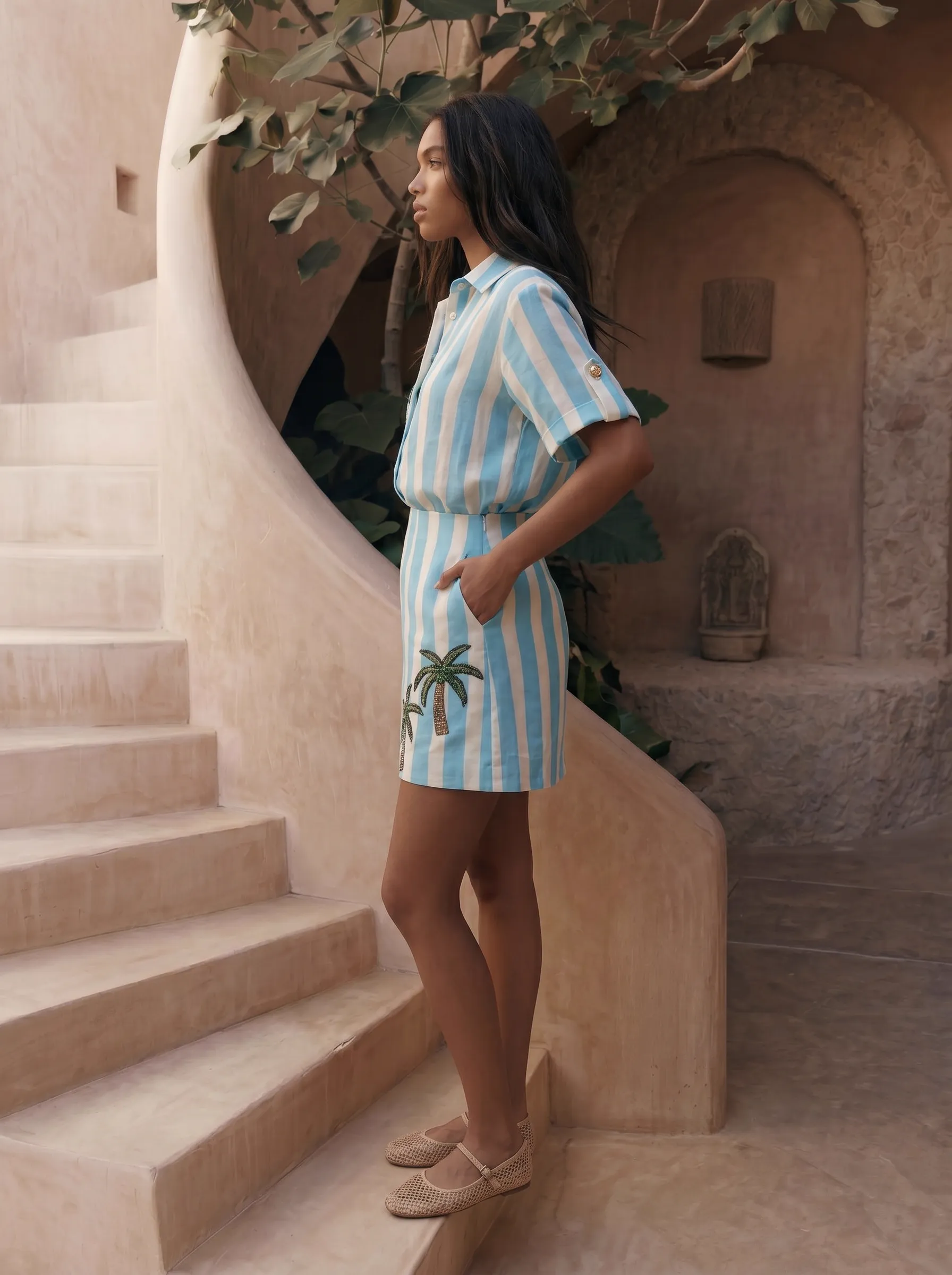
Different garment, same staircase
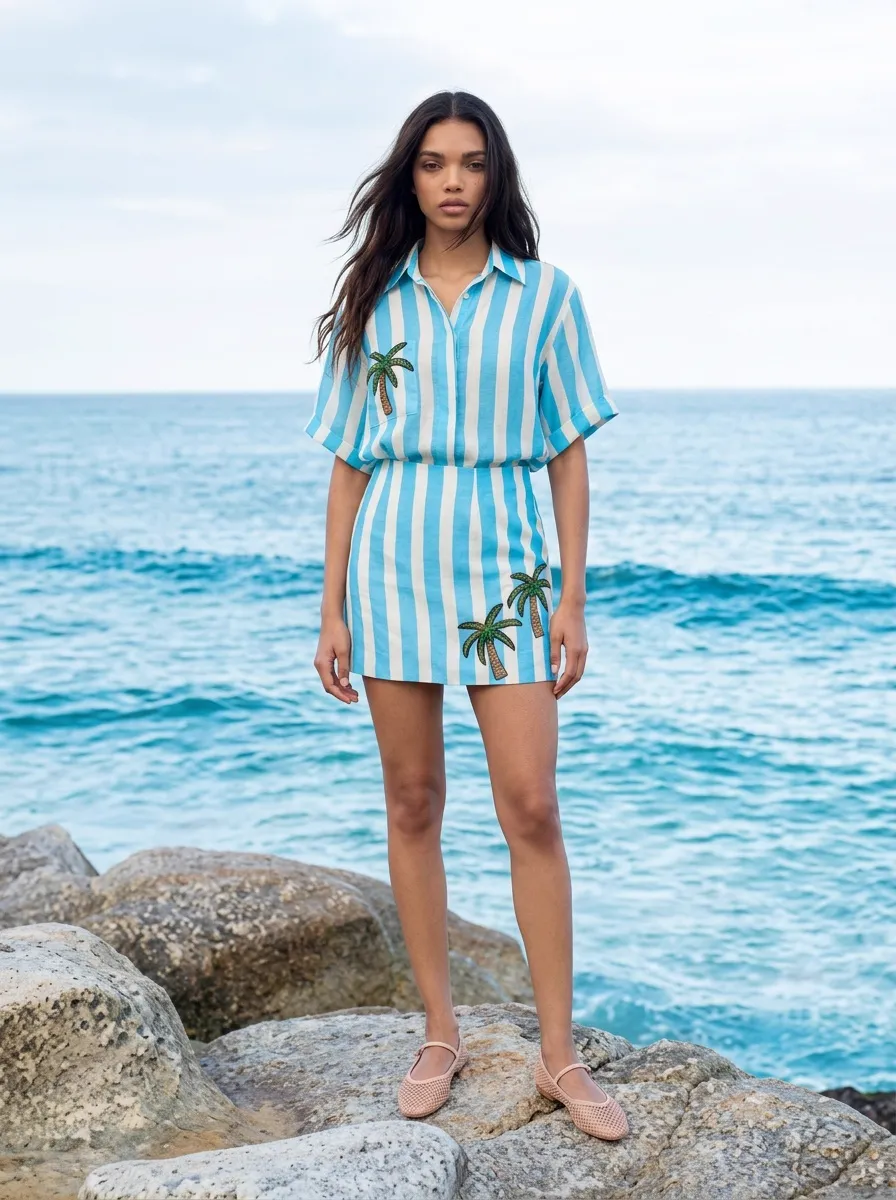
Seaside rocks — extending the world
Sunset beach — the closer
Four distinct frames. One color world. The collection holds together without repeating itself.
One Face. Fourteen Garments.
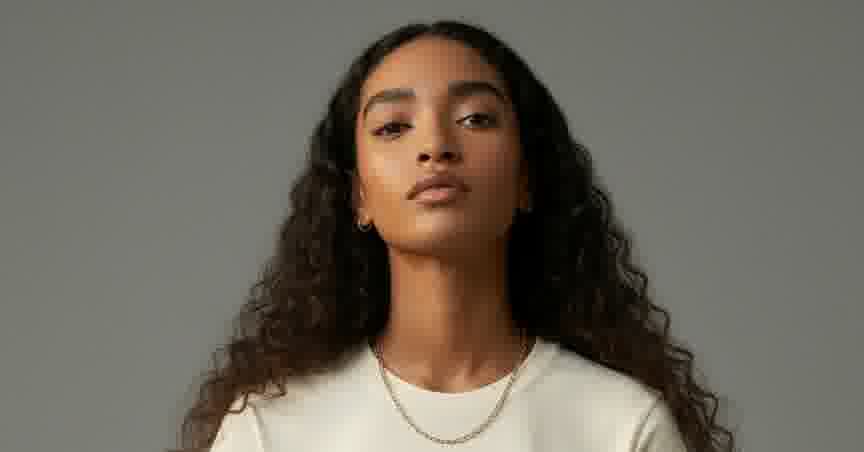
The single most important control in this entire workflow is the face reference. For a 14-look resort collection, the same model wearing every garment is the difference between a campaign and a stitched-together lookbook. When the customer sees the same person in the brown stripe maxi, the navy hat dress, the beige linen set, and the seaside palm two-piece — they read the brand as a brand. When the model changes every frame, they read it as stock photography.
SellHound’s analysis found model consistency across a catalog lifts revenue 23–33%. The face reference is the lever that delivers that consistency without booking the same model across multiple shoot days, multiple cities, or multiple seasons.
Who This Workflow Is For
MODA AI’s resort-collection workflow is built for boutique Shopify brands whose aesthetic depends on a place but whose budget doesn’t stretch to the editorial they’d need:
- Spanish boutique resort brands — Ibiza, Mallorca, Barcelona, Madrid-based labels in the Charo Ruiz, La Veste, Maria de la Orden, Paloma Wool tradition
- Mediterranean lifestyle — Italian linen, Greek island swim, French Riviera resort, Portuguese coastal, Croatian island
- Tropical-coded resortwear — Tulum, Bali, Caribbean, Maldives, anywhere golden-light architecture is the brand promise
- Beachwear and swim — brands whose product needs sea, sand, sunset light to tell the story properly
- Seasonal capsule drops — any brand doing 10–20 look summer/resort capsules where a real shoot day is structurally unaffordable
Frequently Asked Questions
How does MODA AI keep 14 different garments looking like one cohesive collection?
Two reference systems do the work. The face reference locks model identity — same face, same build, same skin tone across every SKU. The background reference holds the location language — same Marrakech adobe, same warm color palette, same time-of-day light. The garment varies; everything around it stays consistent. The result reads as one campaign, not 14 stitched-together generations.
Why does a Spanish boutique brand need Marrakech-style imagery in particular?
Spanish resort and Mediterranean lifestyle brands compete on aesthetic positioning. The customer for Charo Ruiz, La Veste, Maria de la Orden, or Paloma Wool is buying the lifestyle as much as the garment. That lifestyle is encoded in the imagery — Marrakech terracotta, Ibiza white walls, Mallorca stone, Andalusian courtyards. Without that aesthetic, the product looks generic. With it, the product feels like the brand it is.
What would this kind of editorial shoot cost in real life?
A professional fashion editorial day rate runs $10,000 or more once you account for photographer, stylist, hair and makeup, lighting, assistants, and post-production (Siobhan Beasley, 2024). A 14-look campaign realistically requires 3-4 shoot days, plus travel, location permits, model day-rates, and a flight to Morocco. Total budget for a small boutique: easily $40K-$80K. MODA AI delivers the same lookbook breadth for a fraction of one shoot day.
Will the model look like the same person across all 14 looks?
Yes — that’s exactly what the face reference is for. Upload one clear photo of the model look you want and MODA AI carries the face, hair, build, and skin tone through every upload in your session. For a resortwear catalog where the same model is wearing 14 different garments, this is the difference between a campaign and a Frankenstein lookbook. The customer reads consistency as professionalism.
How many background references do I need for a cohesive resort collection?
Fewer than you’d think. For a Marrakech-coded campaign, 2-4 reference images are enough: an adobe wall, a spiral mud staircase, an interior courtyard, and one seaside frame extend the world without breaking it. The references share warm light, earth tones, and architectural language. MODA AI carries that shared visual DNA across every garment shot — so 4 backgrounds give you 14+ frames that feel like one location story.
Is this only for Spanish brands, or any Mediterranean-coded resortwear label?
The same approach works for any boutique whose aesthetic depends on a place — Italian linen brands, Greek island swim labels, French Riviera resort, Tulum-coded beachwear, Portuguese coastal, Croatian island. The mechanic is the same: lock your model with a face reference, set your world with a handful of background references, generate the full collection in one Shopify session. The destination changes; the workflow doesn’t.
Your collection. Your world. One AI session.
Install MODA AI from the Shopify App Store. Upload your garments, your face reference, your background references. Build a cohesive resort campaign in under an hour. From $1 per batch.
Get Started Free